What Does Automation Really Mean for the Future of Work?
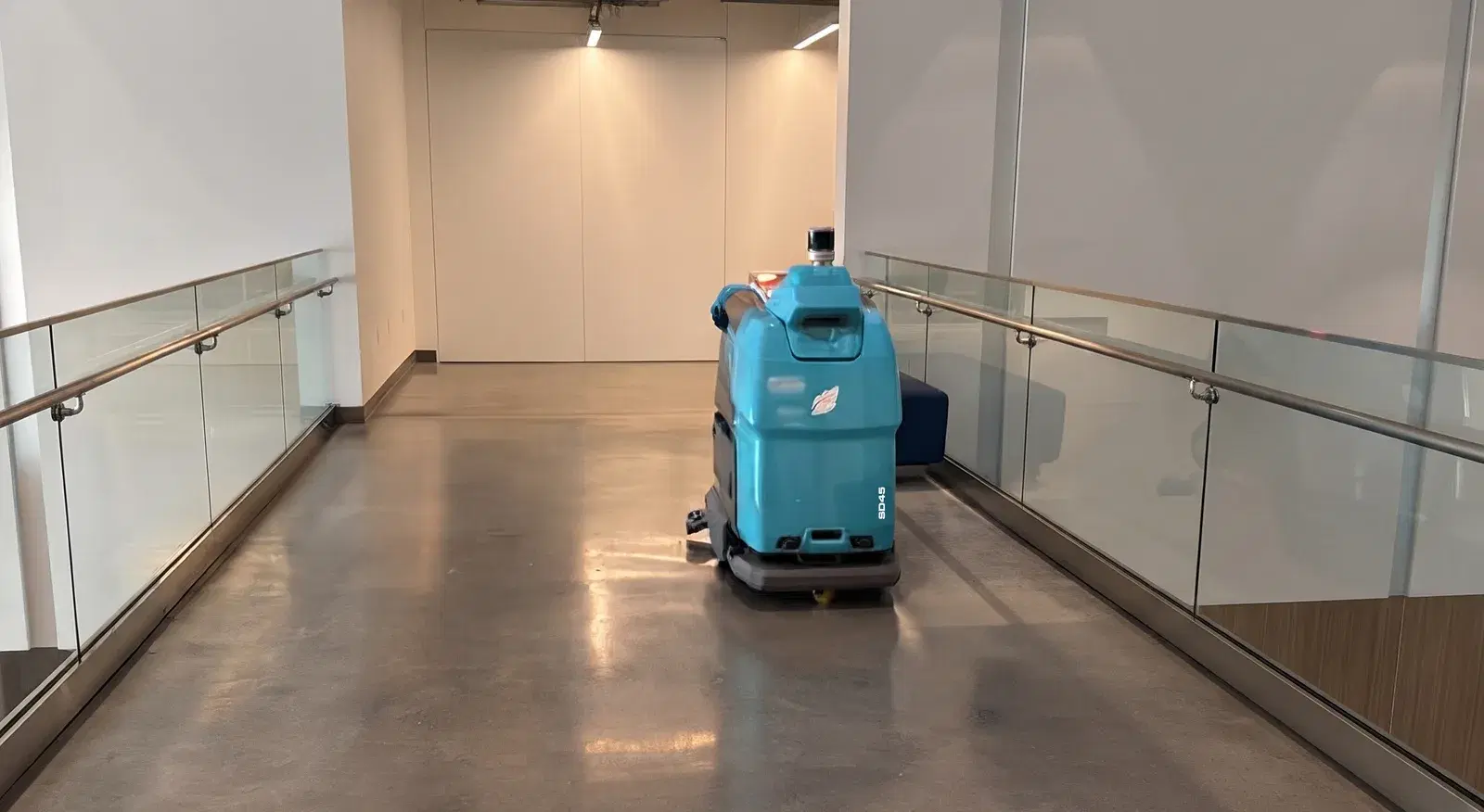
For decades, automation has been misunderstood. Too often, it’s seen as a machine stepping in to take a human’s place, a cost-cutting tactic, or simply a tool for efficiency. But the real essence of automation is far more empowering.
At its core, automation exists to enhance human potential. It eliminates repetitive, low-value tasks that consume time and energy, while ensuring higher efficiency, accountability, and consistency. By doing so, automation frees people to focus on the kind of work that requires uniquely human traits; judgment, dexterity, creativity, and emotional intelligence.
Automation should never be about “replacement.” It should be about liberation, a support system that allows individuals to grow, upskill, and contribute where machines cannot.
Automation in Cleaning: Changing the Game
The cleaning industry provides one of the clearest examples of this shift. Maintaining large floor areas; scrubbing, mopping, sweeping, or vacuuming is often monotonous and physically demanding. These tasks, while necessary, can take a toll on staff morale and productivity.
By introducing robotic floor-cleaning solutions, we transform this experience. Robots take over the heavy lifting, covering large surfaces with precision, consistency, and accountability, while the human workforce is freed to focus on detailed, high-value cleaning.
Think of tasks such as:
Cleaning furniture, couches, and high-touch surfaces
Emptying bins and maintaining waste management routines
Polishing glass walls, windows, and display surfaces
Addressing corner cases and spaces that machines can’t reach
These tasks still require human finesse and adaptability. Machines, as advanced as they are, don’t yet match the flexibility or subtle judgment of a skilled cleaning professional. The result? A collaborative model where machines handle scale and repetition, and humans deliver detail and quality.
Addressing Perceptions Around Automation
Despite the advantages, automation continues to face skepticism, sometimes from the very people it’s designed to help. The concerns are natural, but they vary across different levels of an organization:
The Workforce Level: Staff worry about job security. They fear redundancy and see robots as a threat rather than an assistant.
The Supervisory Level: Supervisors question reliability. Can machines really deliver the same consistency and quality as their teams?
The Managerial Level: Managers focus on ROI. They want to see measurable value before allocating budgets to automation.
The Leadership Level: Executives tend to support innovation but remain focused on broader metrics, cost reduction, quality assurance, scalability, and long-term sustainability.
A successful automation provider must acknowledge these concerns, not through promises, but through proven results. Demonstrations, pilot programs, and transparent metrics are the keys to showing that automation isn’t an expense, but an investment that delivers measurable value across all levels of the organization.
Beyond Cost Savings: The True Value of Automation
A common misconception is that automation is only about reducing costs. While cost optimization is an outcome, it is rarely the most transformative benefit. The real value lies in empowerment and scalability.
Consistency of Quality: Human fatigue, absenteeism, or turnover can impact results. Automation ensures a baseline standard of performance that never wavers.
Data-Driven Accountability: Modern robotic solutions are equipped with sensors, logs, and reporting tools. They provide measurable insights into cleaning operations, something manual methods cannot replicate.
Employee Empowerment: When staff are freed from repetitive floor-cleaning, they can be upskilled into supervisory roles, quality inspection, or specialized cleaning tasks that deliver greater value to clients.
Sustainability: Robots are designed to optimize water and chemical usage, directly contributing to an organization’s environmental and sustainability goals.
In other words, automation is not a replacement for people, but an enabler for progress, delivering better environments, empowered workers, and stronger organizational outcomes.
A Proven Solution: Peppermint Robotics
Peppermint Robotics has redefined what automation can achieve in the cleaning industry. Our AI-enabled cleaning robots aren’t just machines—they are intelligent partners designed to seamlessly integrate into existing processes.
Here’s what sets our solutions apart:
Efficiency: Cover large areas with precision and accountability.
Consistency: Deliver the same high-quality clean, every time.
Integration: Fit into existing workflows without disruption.
Empowerment: Free human teams for smarter, more detailed work.
The result is a cleaner, safer, and more productive environment where automation and people thrive together.
The Future of Cleaning: Human + Machine Collaboration
The journey of automation in cleaning is still evolving. As technology advances, robots will become even more versatile, handling a wider variety of cleaning tasks and working seamlessly alongside human teams. But one thing will remain constant: the human element.
No matter how advanced machines become, the subtle judgment, problem-solving, and empathy that people bring to the workplace will remain irreplaceable. The winning formula for the future will be collaboration, not competition, machines handling the repetitive scale, and people bringing creativity, adaptability, and care.
Seeing is Believing
Skepticism fades when results are experienced firsthand. That’s why we encourage organizations to see our solutions in action.
Talk to our experts. Request a live demonstration. Watch how robotic cleaning transforms not just floors, but the way your teams work.
At Peppermint Robotics, we believe automation should handle the hard work, while your people focus on the smart work. Together, they create the future of cleaning, efficient, empowered, and sustainable.